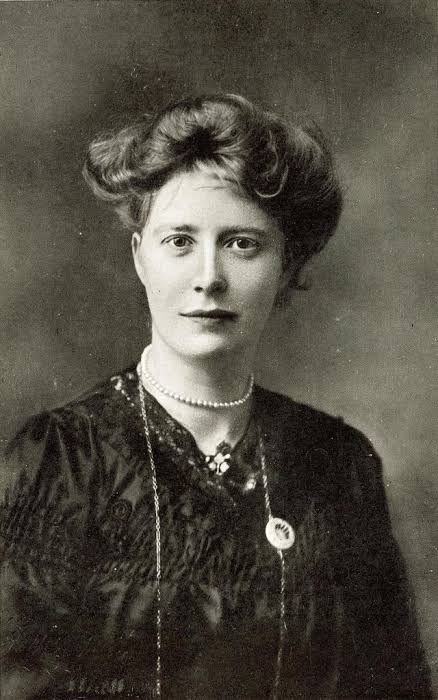
 Elizabeth Amy Dillwyn (May 16, 1845 – December 13, 1935) was a trailblazing Welsh industrialist, novelist, and social reformer whose life challenged the gender conventions
of the Victorian and Edwardian eras.
Elizabeth Amy Dillwyn (May 16, 1845 – December 13, 1935) was a trailblazing Welsh industrialist, novelist, and social reformer whose life challenged the gender conventions
of the Victorian and Edwardian eras.Partner Olive Talbot
Queer Places:
Ty Glyn, now Mumbles Nursing Home, 278 Mumbles Road, West Cross, Swansea, SA3 5AB
Saint Paul Churchyard, De-La-Beche Rd, Sketty, Swansea SA2 9AR, United Kingdom
Elizabeth Amy Dillwyn (May 16, 1845 – December 13, 1935) was a trailblazing Welsh industrialist, novelist, and social reformer whose life challenged the gender conventions
of the Victorian and Edwardian eras.
Born in Sketty, Swansea, to a prominent, politically active family, Dillwyn was the daughter of the industrialist and Liberal Member of Parliament Lewis Llewelyn Dillwyn and Elizabeth (née De la Beche). Her family background was intellectually and socially distinguished; she counted naturalists, photographers, and politicians among her relatives. A significant early tragedy occurred in 1864 when her fiancé, Llewelyn Thomas, died shortly before their wedding; she never married.
Dillwyn became one of the first female industrialists in Great Britain. In 1892, following the deaths of her brother and father, she inherited her father’s debt-ridden spelter (zinc) works in Llansamlet.
Rather than allowing the business to fail, she took personal management of the works, committing herself to paying off over £100,000 in debts—a massive sum at the time. She lived in modest lodgings and redirected potential profits to creditors until the company was solvent in 1899, eventually incorporating it as "Dillwyn & Co." in 1902. Her efforts saved approximately 300 jobs.
As a novelist, Dillwyn wrote six books, including The Rebecca Rioter (1880), which explored the social injustices surrounding the Rebecca Riots. Her writing often addressed:
Feminism and social reform: She was an early and active supporter of the women's suffrage movement, joining the National Union of Women's Suffrage Societies.
Class conflict: She frequently explored the tensions within the British class system.
Non-conformity: She famously rebelled against Victorian mourning customs by wearing a bright purple skirt and flowers to her father's funeral, and she was widely known for her unconventional appearance, which included "mannish" dress and smoking cigars in public.
In recent decades, scholars—most notably Professor Kirsti Bohata of Swansea University—have identified Dillwyn as an important lesbian figure.
Dillwyn’s personal diaries reveal a deep, passionate relationship with her friend Olive Talbot. In these private writings, she referred to Talbot as her "wife" and expressed that she was "romantically, passionately, foolishly" in love.
Researchers argue that her novels, such as Jill (1884), serve as early examples of lesbian fiction, containing coded expressions of same-sex desire and explorations of romantic love between women.
While the term "lesbian" was not in common usage during her lifetime, Dillwyn consciously embraced her "difference," leveraging her independence to live outside the restrictive norms imposed upon women of her time.
Dillwyn is remembered today as a pioneering woman who combined business acumen with radical social advocacy. In 2024, a park in Swansea was named in her honor, cementing her status as an inspirational figure in Welsh history.
References:
Support this project
This website is a passion project researched, developed, and funded entirely by me. If you find the content valuable and would like to help support the ongoing research and hosting costs, any contribution is deeply appreciated.
Thank you for keeping this independent resource alive!
My books on Amazon: Elisa Rolle's books